
LogoScribble
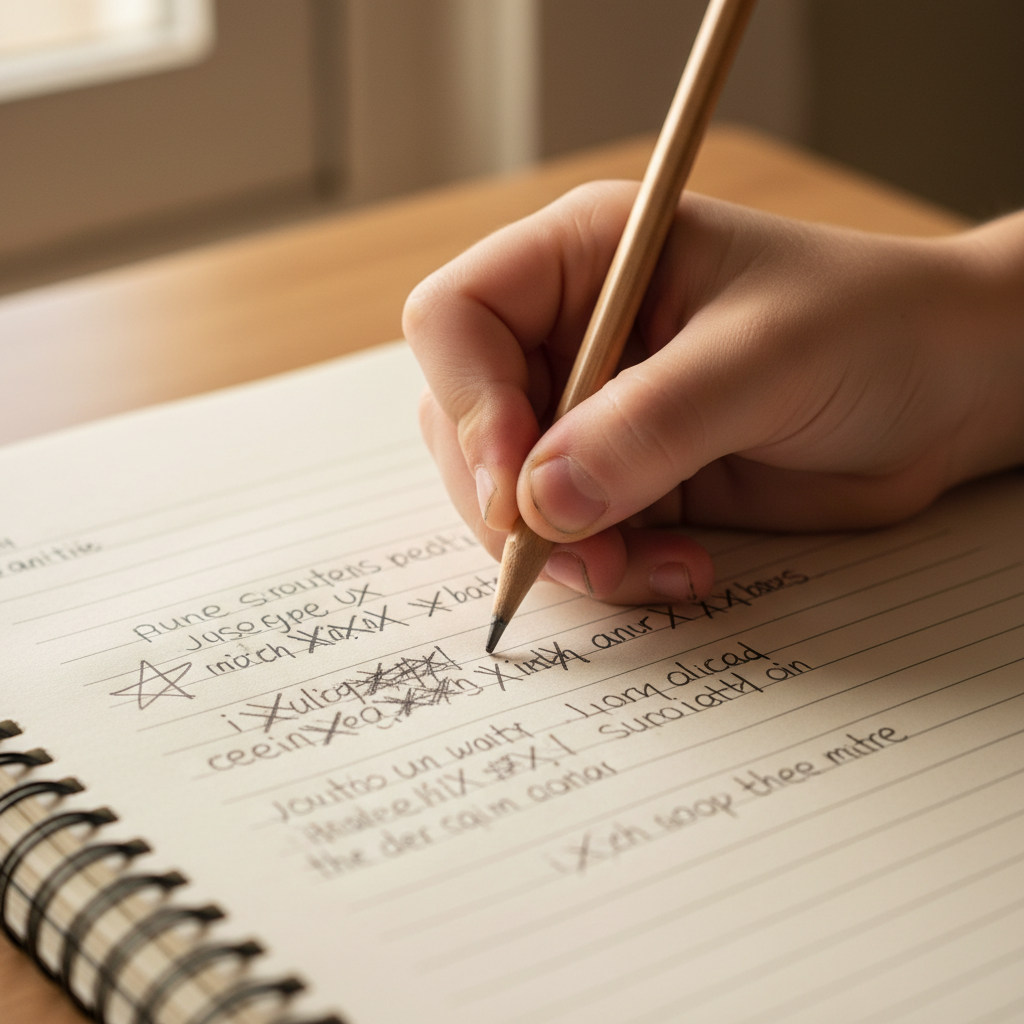
Child's hand mid-sentence in a notebook, pencil blurred with motion, page filled with crossed-out words and rewritten lines and one doodled star in the margin
Ages 6–14 · Small Groups · Real Stories

Where kids stop writing and start telling stories.

A workshop for the kid who narrates car rides, fills notebooks without being asked, and has a dragon with opinions. We shape that spark into craft.

Read student work
Scroll to read
Real Work. Real Kids.

The anthology scroll

Everything below was written by a child in a Scribble workshop. Read it like a literary magazine. Notice how it makes you feel.

Fable

The Rabbit Who Knew Better

The rabbit wore a watch but never looked at it. "Time," she said, "is for people who haven't found their burrow yet."
T

Theo

Age 7 · Writing for 4 months

He read it at dinner. We stopped eating to listen.

Marcus & Priya Okonkwo

Young boy smiling with a pencil in hand
What they learned

In this piece, Theo learned to give objects personality without explaining it — the watch tells us everything about the rabbit's philosophy without a single lecture.

Mystery

The Tuesday Door

Every Tuesday, Mrs. Calloway left her back door unlocked. Nobody in the neighborhood talked about it. That was the first clue.
S

Simone

Age 10 · Writing for 11 months

She finished it at midnight and woke me up to read the ending.

Danielle Ferreira

Girl writing intently in a notebook at a wooden desk
What they learned

Simone discovered that mystery lives in what characters don't say. She rewrote this opening four times, cutting each version until only the tension remained.

Poem

Weather Report

Rain doesn't fall.It arrives.Like a cousin nobody invitedwho somehow knows where the cookies are.
Y

Yusuf

Age 8 · Writing for 6 months

I texted this to my sister. She texted back: "He's 8??"

Amara & James Osei

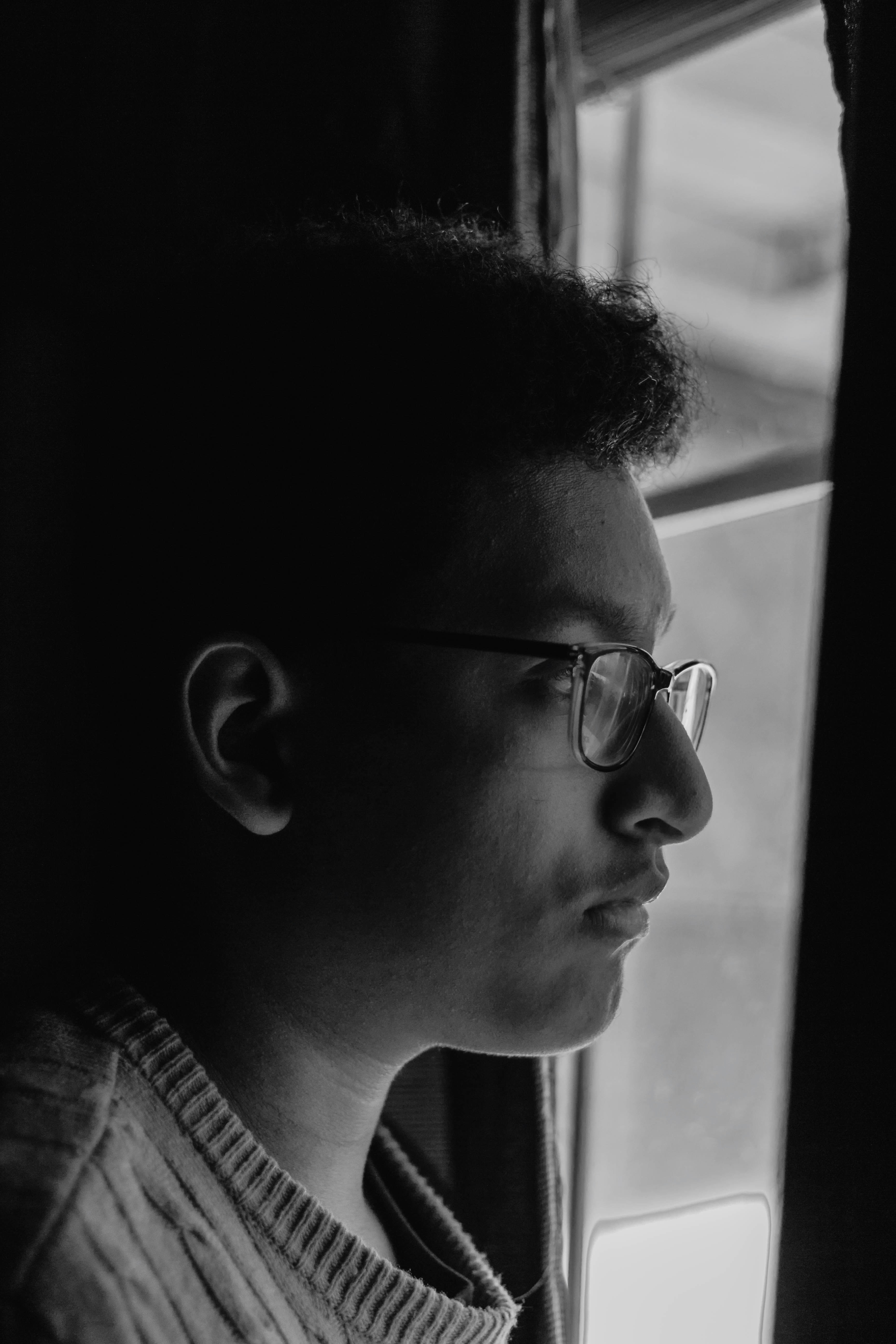
Boy with curly hair looking out a rainy window thoughtfully
What they learned

Yusuf wrote this after a workshop on "wrong comparisons" — the exercise of describing something with a metaphor that shouldn't work but does. His cousin metaphor was the first one he wrote and the one he kept.

Chapter Opener

After the Water

The city had two kinds of people: those who remembered the flood, and those who had been born after it. You could tell them apart immediately. The ones who remembered always looked up when it rained.
C

Clara

Age 13 · Writing for 22 months

Her English teacher asked if she had help. She didn't.

Helen & Rob Nakamura

Teen girl reading a thick novel in afternoon sunlight
What they learned

Clara spent three months learning to build worlds through detail rather than description. This opening came from a single prompt: "What do survivors notice that others don't?" She wrote the full chapter in one weekend.

Our philosophy

We believe the spark is already there.

01

Every child has a voice. Not every child has been given permission to use it.

School teaches writing as a task. We teach it as a practice — something you do because you need to, because there are things inside that won't stay quiet.

02

The goal is never a perfect sentence. It's an honest one.

We don't correct children into silence. We ask better questions: "What do you actually mean? What does it feel like? What would your character say if they weren't being polite?"

03

Good writing comes from reading. Great writing comes from reading and being heard.

Every session ends with a reading circle. Not a performance — a sharing. Children hear their words in their own voice, and discover that their words matter to other people.

48
Writers enrolled
6–14
Ages we serve
8
Max group size
3 yrs
Running workshops

What parents say

Real quotes. Real families. No prompting required.

She used to say she hated writing. Now she reads her stories to the dog.

Keisha & David Okafor

Child, age 9·Story Lab

His teacher pulled me aside to ask who was helping him. Nobody. Just Scribble.

Tomás Rivera

Child, age 11·Craft Studio

My daughter described grief in four sentences. I cried. She was 8.

Lin Zhao

Child, age 8·Spark Workshop

He narrates our grocery trips now. Full dramatic tension. I don't hate it.

Rachel & Ben Whitfield

Child, age 7·Spark Workshop

She wrote a story about our neighborhood that made me see it differently.

Adaeze Nwosu

Child, age 12·Craft Studio

He asked me what the saddest word in English is. I said I didn't know. He said 'almost.'

James & Priya Mehta

Child, age 10·Story Lab

She finished a chapter book she wrote herself. 47 pages. She's nine.

Marguerite Dupont

Child, age 9·Story Lab

The workshop gave him permission to be weird on the page. He needed that.

Kofi & Sandra Asante

Child, age 13·Craft Studio

She used to say she hated writing. Now she reads her stories to the dog.

Keisha & David Okafor

Child, age 9·Story Lab

His teacher pulled me aside to ask who was helping him. Nobody. Just Scribble.

Tomás Rivera

Child, age 11·Craft Studio

My daughter described grief in four sentences. I cried. She was 8.

Lin Zhao

Child, age 8·Spark Workshop

He narrates our grocery trips now. Full dramatic tension. I don't hate it.

Rachel & Ben Whitfield

Child, age 7·Spark Workshop

She wrote a story about our neighborhood that made me see it differently.

Adaeze Nwosu

Child, age 12·Craft Studio

He asked me what the saddest word in English is. I said I didn't know. He said 'almost.'

James & Priya Mehta

Child, age 10·Story Lab

She finished a chapter book she wrote herself. 47 pages. She's nine.

Marguerite Dupont

Child, age 9·Story Lab

The workshop gave him permission to be weird on the page. He needed that.

Kofi & Sandra Asante

Child, age 13·Craft Studio

Three programs. One craft.

We match every child to the right room — not by grade, but by where they are as a writer.

Spark Workshop

For the writer who doesn't know they're a writer yet.

Ages 6–98 sessions · 45 min
  • Story starters and world-building games
  • Picture-book to short-story bridge
  • Reading circle every session
  • Take-home notebook with prompts
Most popular
📖

Story Lab

Turn good ideas into finished stories.

Ages 8–1210 sessions · 60 min
  • Character, tension, and resolution
  • The art of revision (without dread)
  • Cross-genre exploration
  • End-of-term anthology publication
  • One-on-one feedback session
🖊️

Craft Studio

For writers who are ready to be taken seriously.

Ages 11–1412 sessions · 75 min
  • Literary craft study (published authors)
  • Personal voice development
  • Long-form and experimental forms
  • Peer workshop with critique protocol
  • Portfolio preparation
Spring semester · Spots filling

The notebook is blank. The story is already there.

Five questions. Two minutes. A recommendation that feels like it was written for your specific child — because it was.

No commitment required
Free 15-min placement call included
Groups of 8 — never more
K
T
S
Y

48 writers enrolled

Spring 2026 semester

Discover Your Child's Writing Voice

5 questions · Takes 2 minutes

Question 1 of 50% complete

How old is your child?

We group writers by age and stage, not grade level.